

Medicare costs explained 2026 go far beyond your monthly premium. Most people are surprised by deductibles, copayments, and coverage gaps that add hundreds or thousands to their annual bills.
At Central Ohio Insurance Services, Inc., we’ve helped countless retirees understand where their money actually goes. This guide breaks down exactly what impacts your Medicare costs and how to keep them manageable.
What Determines Your Medicare Premium in 2026
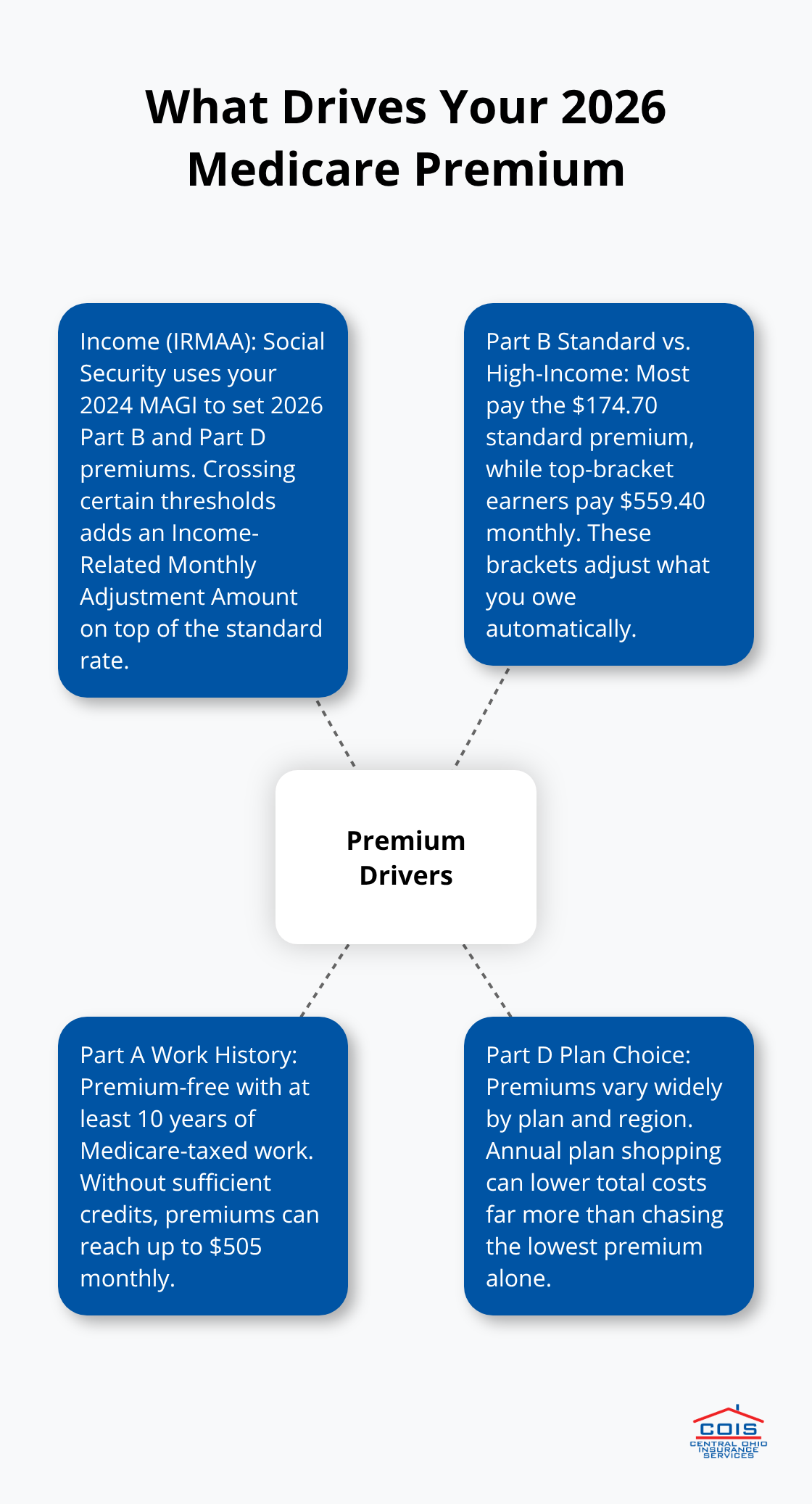
Your Medicare premium isn’t a one-size-fits-all number. The Social Security Administration bases your Part B and Part D premiums on your modified adjusted gross income from two years prior, which means your 2026 costs reflect what you earned in 2024. If your income exceeded $97,000 as a single filer or $194,000 as a married couple filing jointly, you’ll pay Income-Related Monthly Adjustment Amounts on top of the standard premium. For 2026, the standard Part B premium sits at $174.70 monthly for most beneficiaries, though this increases to $559.40 monthly for high-income earners in the top bracket. Part A remains free for most people who paid Medicare taxes for at least ten years, but those without sufficient work history face a premium of up to $505 monthly. Part D premiums vary depending on which drug plan you select, which is why shopping plans annually matters far more than most people realize.
Income Thresholds Hit Harder Than You Think
The income brackets that trigger higher premiums are deceptively low compared to what many retirees earn. A married couple with $200,000 in annual income pays significantly more than someone at $194,000, and the jump happens automatically without any notification from Medicare. If you’re married but file separately, the threshold drops to just $97,000, which catches many couples off guard. If your income fluctuates-perhaps you sold a rental property or received a lump-sum distribution-you can appeal the income determination to Social Security with documentation, something many people don’t know they can do.
Part A, B, and D All Move at Different Speeds
Part B premiums increased from 2025 to 2026, reflecting rising healthcare costs. Part A deductibles jumped to $1,676 per benefit period in 2026, up from $1,556 the prior year. Part D premiums don’t follow a predictable pattern because insurance companies offering plans in your area and prescription drug price shifts annually determine them. Most retirees spend between $300 and $500 monthly across all Medicare premiums combined, though this excludes deductibles and copayments that emerge once you actually use healthcare services.
Why Shopping Plans Matters More Than Premium Price Alone
A cheap Part B premium paired with a terrible drug plan creates false savings that vanish the moment you fill a prescription. You need to review all three components together rather than focusing solely on the lowest premium. The actual cost of your coverage depends on which medications you take, which doctors you see, and how often you access healthcare services. These hidden costs-deductibles, copayments, and coverage gaps-often dwarf your monthly premium and catch retirees off guard when bills arrive.
What Really Costs Money After Your Premium
Deductibles and Copayments Add Up Fast
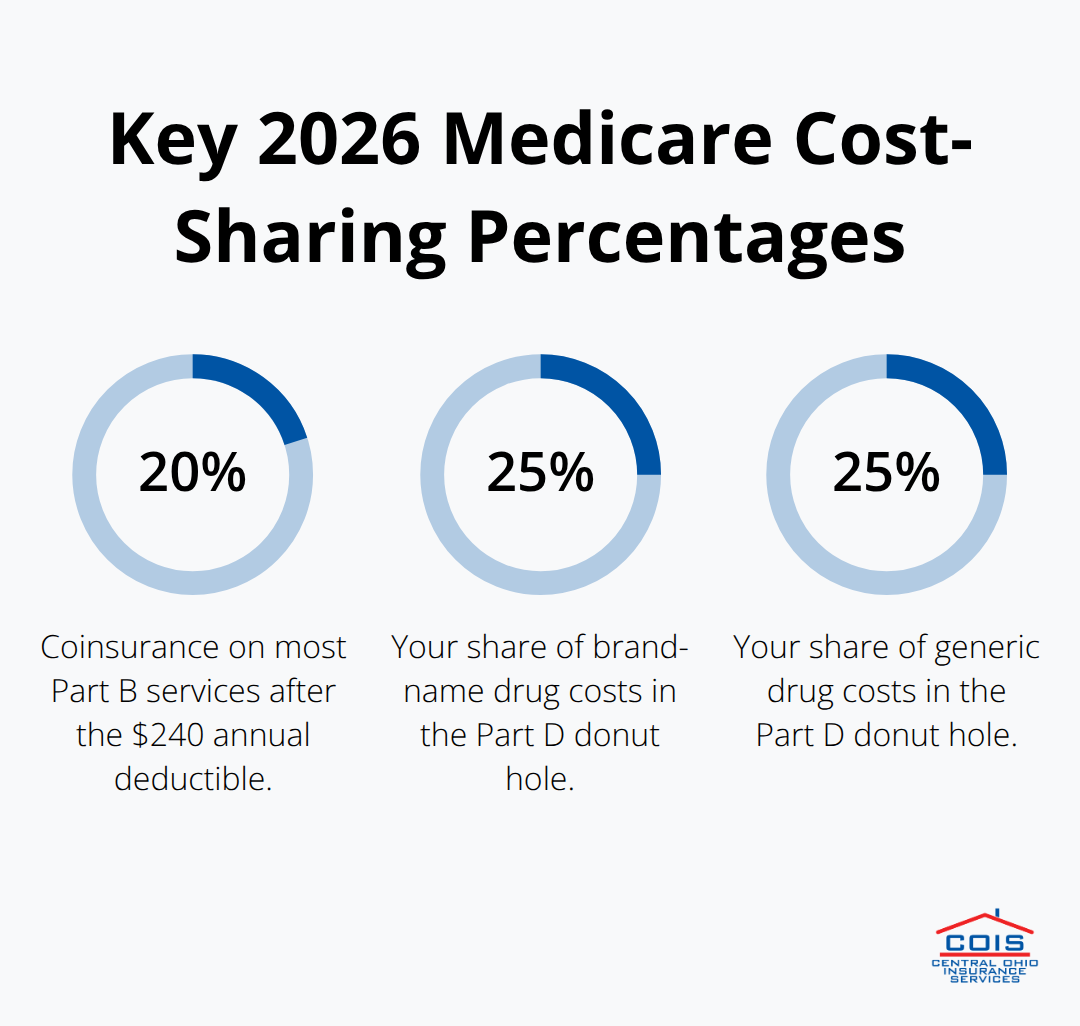
Deductibles and copayments form the second layer of Medicare expenses that most retirees underestimate. In 2026, Part A carries a $1,676 deductible per benefit period, meaning you pay this amount out-of-pocket before Medicare covers inpatient hospital stays. Part B deductible sits at $240 annually, then you pay 20 percent coinsurance on most services after that threshold is met. Part D deductibles vary by plan but typically range from $0 to $565, and many plans structure their costs to hit you hardest on brand-name medications.
A single hospitalization plus ongoing prescriptions can easily trigger $3,000 to $5,000 in out-of-pocket costs before you’ve paid a single copayment. Most people focus on their monthly Part B premium and ignore that they’ll spend far more on actual healthcare once they use it.
The Medicare.gov Plan Finder Tool Reveals Your True Costs
The Medicare.gov Plan Finder tool shows your estimated out-of-pocket costs for specific plans and medications, yet fewer than 40 percent of retirees use it annually when shopping. This gap between what people expect to pay and what they actually pay creates significant financial stress among Medicare beneficiaries. You can input your medications and preferred doctors to see which plans minimize your total spending rather than just your premium.
The Donut Hole Creates Mid-Year Surprises
Coverage gaps in prescription drug plans create the most dangerous blind spots in Medicare planning. Part D includes a coverage gap known as the donut hole, where your costs jump significantly after you and your plan spend $6,700 combined on covered drugs in 2026. Once you hit this threshold, you pay 25 percent of brand-name drug costs and 25 percent of generic costs until your out-of-pocket spending reaches $8,550, at which point catastrophic coverage kicks in.
If you take multiple medications for chronic conditions, you can hit this gap by mid-year, turning affordable monthly costs into shocking quarterly bills. Some plans offer better gap coverage than others, and comparing this specific feature across your available options matters more than comparing premiums.
Extra Help and Out-of-Pocket Maximums Change Everything
If your income qualifies you for the Extra Help program administered by Social Security, you might eliminate copayments entirely and get your deductible waived-yet only about 1.5 million of the 3 million eligible beneficiaries actually enroll. Out-of-pocket maximums also differ significantly by plan type, ranging from $7,550 to $11,500 for 2026, which means the cheapest plan upfront could cost substantially more if you need significant healthcare.
These hidden costs-deductibles, copayments, coverage gaps, and out-of-pocket maximums-often dwarf your monthly premium and catch retirees off guard when bills arrive. Understanding how these pieces interact with your specific medications and healthcare needs determines whether you’ll face financial surprises or predictable, manageable costs. The strategies that actually reduce your total spending require looking beyond the premium price tag to the full picture of what you’ll pay when you actually use your coverage.
How to Actually Cut Your Medicare Costs
Employer Retiree Coverage Slashes Your Out-of-Pocket Costs
Employer retiree coverage remains one of the most underutilized cost-reduction strategies available, yet fewer than 30 percent of retirees with access to it understand how coordination works with Medicare. If your former employer offers retiree health benefits, that coverage typically becomes your secondary payer after Medicare processes claims, which means your out-of-pocket costs drop dramatically compared to Medicare alone. Medicare pays its standard benefit first, then your employer plan covers some or all of the remaining balance, effectively capping your deductibles and copayments at levels far below what standalone Medicare requires.
Some retiree plans cover the Part B premium entirely, others waive deductibles, and a few cover prescription drugs beyond what Part D provides. The catch is that you must enroll in Medicare Part A and Part B when you’re first eligible to avoid permanent penalties, even if your employer coverage seems more generous. Many people delay Medicare enrollment thinking their retiree coverage is sufficient, then face lifetime surcharges when they finally enroll.
If you have retiree coverage, contact your former employer’s benefits department to request a Summary of Benefits and Coverage document that shows exactly how your plan coordinates with Medicare. This single document often reveals thousands in annual savings that people miss.
The Extra Help Program Eliminates Copayments for Qualifying Beneficiaries
The Extra Help program administered by Social Security eliminates copayments and deductibles for eligible beneficiaries, yet enrollment hovers at only 50 percent of those who qualify, leaving real money on the table. Your income must fall below 150 percent of the federal poverty level to qualify, and the program covers Part D premiums, deductibles, and copayments almost entirely. You apply through Social Security or your state Medicaid office, and approval happens within weeks rather than months.
Enrollment Deadlines Prevent Permanent Penalties
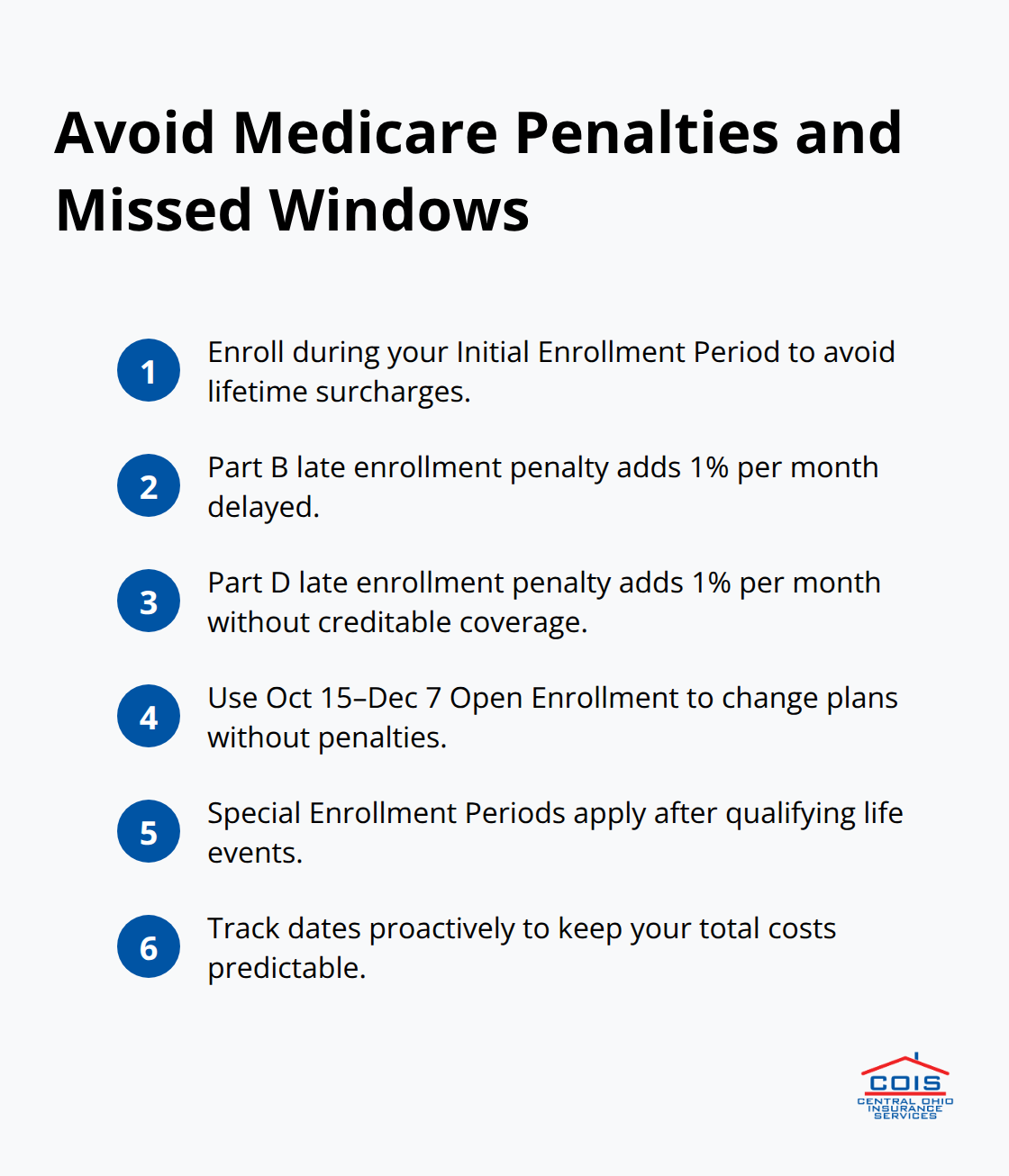
Timing your enrollment periods strategically prevents automatic penalties that compound annually. If you miss your Initial Enrollment Period when you first become eligible for Medicare, you’ll face a 1 percent monthly surcharge on Part B premiums for every month you delay-this penalty sticks with you permanently, even after you eventually enroll. The same 1 percent monthly penalty applies to Part D if you go without creditable coverage for more than 63 days.
Open Enrollment runs from October 15 through December 7 each year, giving you the window to switch plans without penalties, but many people miss this deadline entirely. If you experience a qualifying life event like retirement, loss of employer coverage, or moving to a new state, you can enroll outside the standard periods. These enrollment rules demand attention to calendar dates rather than waiting until you think you need coverage.
Final Thoughts
Your Medicare costs explained 2026 hinges on decisions you make during Open Enrollment, not on passive acceptance of default settings. The premiums, deductibles, copayments, and coverage gaps interact in ways that shift your annual spending by thousands of dollars. A plan that appears affordable in October might expose you to significant out-of-pocket costs by year-end once you factor in your medications and actual healthcare use.
Annual plan review prevents the financial surprises that catch most retirees off guard. Your medications change, plan networks shift, and premium costs move every single year, which means the coverage that worked in 2025 may leave you exposed in 2026. The Medicare.gov Plan Finder tool takes fifteen minutes to use and shows your estimated out-of-pocket costs based on your actual prescriptions and doctors.
We at Central Ohio Insurance Services, Inc. help retirees navigate Medicare planning alongside their broader insurance needs. Our licensed team reviews your complete coverage picture to identify gaps and opportunities for savings. Contact us to discuss your specific situation and align your Medicare costs with your actual healthcare needs.
The information provided in this blog is for general informational purposes only and does not constitute legal, financial, or insurance advice. Coverage options, terms, and availability may vary. Please consult with a licensed professional for advice specific to your situation. Artificial intelligence may have been used to generate text and images in some blog articles and may contain inacuracies.