

Medicare plan options 2027 are shifting, and the choices can feel overwhelming. We at Central Ohio Insurance Services, Inc. know that understanding your coverage options matters more than ever.
This guide walks you through the new plans, changes, and how to pick what works for your health and budget.
The Three Main Medicare Plan Types
Original Medicare: Maximum Provider Choice with Financial Risk
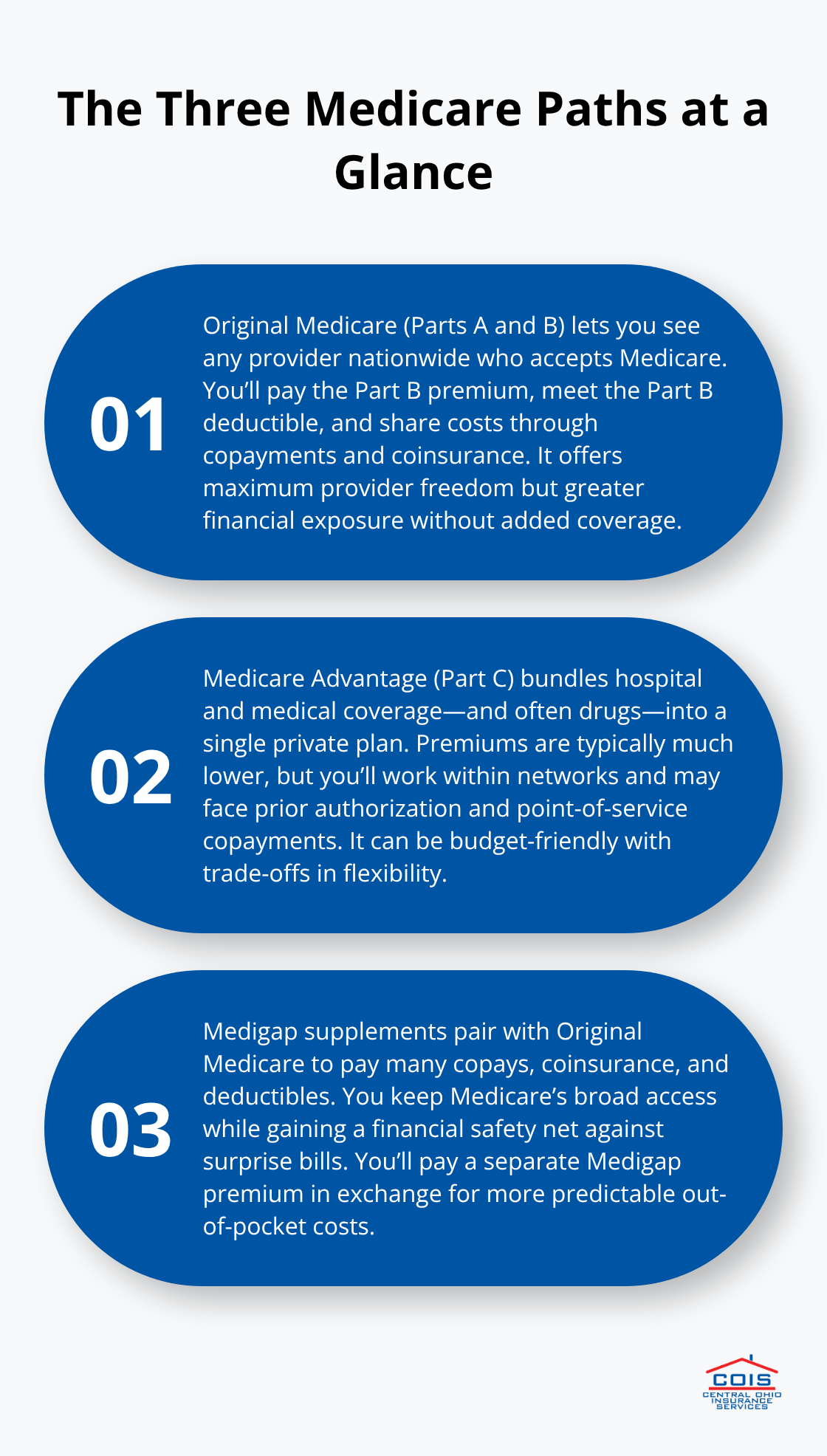
Original Medicare, consisting of Part A hospital insurance and Part B medical insurance, gives you access to any provider nationwide who accepts Medicare. You pay a Original Medicare Part B premium of $0 for most people in 2026, plus you cover a $240 deductible for Part B and share costs through copayments and coinsurance. The flexibility is real, but so is the financial exposure-without additional coverage, you could face substantial out-of-pocket costs for extended hospital stays or ongoing medical care.
This option works best if you have predictable healthcare needs and value provider choice above all else. You maintain complete freedom to switch doctors or seek specialists without network restrictions.
Medicare Advantage: Lower Premiums with Trade-offs
Medicare Advantage plans, known as Part C, bundle hospital and medical coverage into a single plan offered by private insurers, often with prescription drug coverage included. These plans typically cost far less than Original Medicare, with premiums averaging around $9 per month for 2027 according to projections, making them attractive when budget is tight. The tradeoff is real: you accept narrower provider networks, navigate prior authorization requirements for certain treatments, and may face higher copayments at the point of service.
UnitedHealthcare has 50 years serving Medicare members and was named a Best Insurance Company for Medicare Advantage in 2026 by U.S. News & World Report, reflecting the stability many beneficiaries seek in their coverage decisions.
Medigap Supplements: Filling the Coverage Gaps
Medigap supplements, sold by private carriers, fill the gaps in Original Medicare coverage by paying copayments, coinsurance, and deductibles you’d otherwise owe. These plans charge separate premiums ranging widely depending on your age and location, but they pair with Original Medicare to eliminate most surprise medical bills. You maintain your Original Medicare benefits while adding a financial safety net that protects against unexpected costs.
Each path offers distinct advantages based on your health conditions, prescription needs, and financial situations. The right choice depends on what matters most to you-provider flexibility, monthly affordability, or predictable out-of-pocket expenses. Understanding how 2027 changes affect each option will help you make an informed decision about your coverage.
What’s Actually Changing in Your Medicare Costs and Coverage
Part D Premiums Are Climbing Sharply
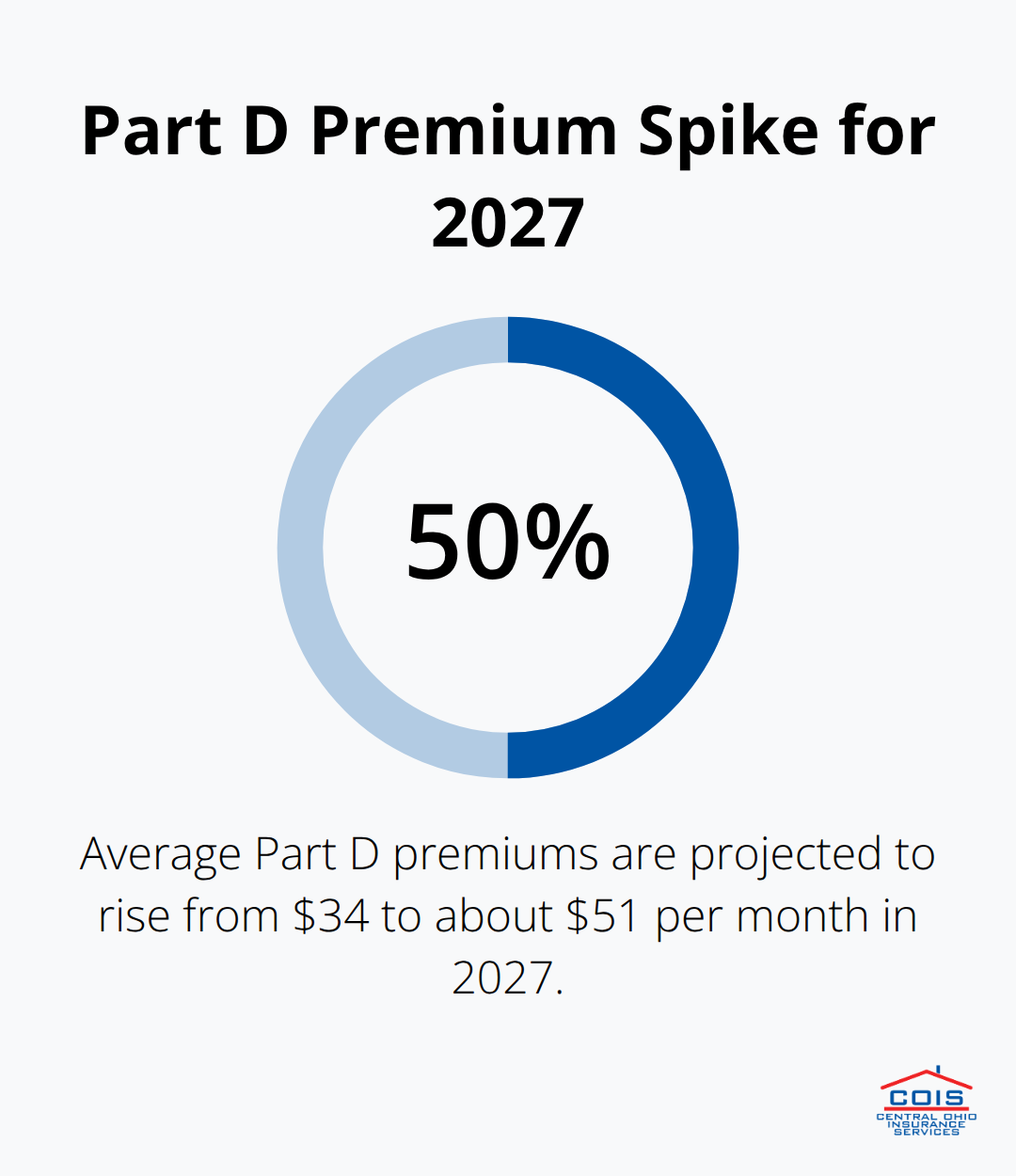
Part D prescription drug premiums jump dramatically in 2027, with the Kaiser Family Foundation projecting costs will rise from $34 per month in 2026 to roughly $51 per month-a 50 percent increase affecting millions of seniors. More than 4 million beneficiaries currently enrolled in zero-premium Part D plans will lose that option entirely next year, forcing them to either switch plans or absorb new monthly costs. The standard Part D deductible also climbs from $615 to $700, which means you’ll pay more out-of-pocket before your coverage kicks in.
If you’re among the roughly 10.4 million enrollees not eligible for financial assistance, there’s a three-in-four chance your premiums will increase if you stay in your current plan, according to KFF analysis. This isn’t theoretical-if you do nothing during open enrollment through December 7, 2026, you could face hundreds of dollars in extra costs next year.
The Massive Price Variation Creates Real Savings Opportunities
The cheapest standalone Part D plan for 2027 is Centene’s Wellcare Value Script Rx at approximately $6.50 per month, while the most expensive option tops out near $204 per month. This $197 monthly difference means active shopping during open enrollment isn’t optional-it’s how you control your actual expenses. The massive variation in Part D pricing across carriers makes comparing your options essential to finding affordable coverage that includes your medications.
More than 4 million seniors have already lost their plans for 2027 and must select new coverage, while additional plan exits and carrier changes mean the Medicare market remains volatile. Shopping now protects you from paying significantly more than necessary for the same level of drug coverage.
Medicare Advantage Plans Offer a Different Cost Structure
Medicare Advantage plans offer a sharper contrast to standalone Part D, with premiums projected to average around $9 per month for 2027, far below standalone Part D costs. These bundled plans (which include hospital, medical, and often prescription drug coverage) appeal to beneficiaries watching their budgets closely. However, the trade-off involves narrower provider networks and prior authorization requirements that can affect your access to specific treatments or specialists.
Your Enrollment Window Is Limited
The Annual Enrollment Period runs through December 7, giving you a limited window to compare your 2027 options and switch if a cheaper plan covers your drugs and doctors. After December 7, you’ll have another chance through January 1 to March 31 for one plan change, but waiting costs you money since your new coverage won’t start until the first of the following month. The timing matters significantly-acting now locks in your coverage start date for January 1, 2027, while delaying means a later effective date and continued exposure to 2026 costs.
Understanding how these premium increases and plan changes affect your specific situation sets the stage for making the right choice. The next section walks you through how to assess your actual healthcare needs and budget to select the plan that truly fits your life.
Selecting Your 2027 Plan Without Wasting Time
Start with Your Medications and Doctors
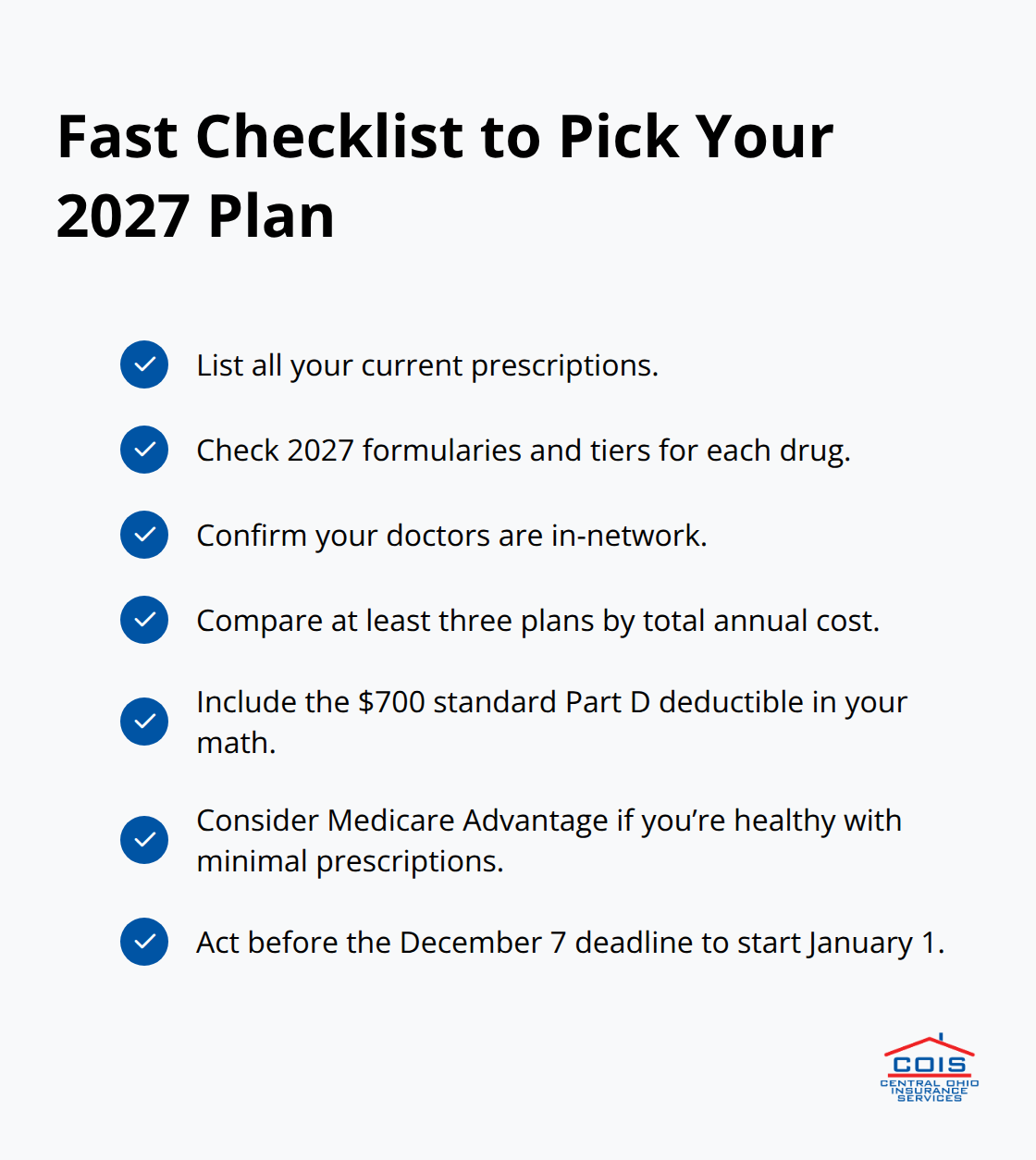
Pull out every drug you currently take and check which plans actually cover them at an affordable cost. Part D formularies change yearly, meaning your current plan might suddenly require prior authorization or move your medications to a higher cost tier in 2027. Verify whether your doctors remain in-network and whether your specific drugs are covered using your plan’s tools or website. This step alone prevents the scenario where you pick a plan only to discover your blood pressure medication costs $200 per month instead of $35.
Calculate Your Realistic Annual Healthcare Spending
If you visit specialists regularly, need imaging or lab work, or take multiple medications, Original Medicare with a Medigap supplement often costs less than it appears because you eliminate surprise bills. Conversely, if you’re relatively healthy with minimal prescriptions, a Medicare Advantage plan at $9 monthly saves substantially even with higher copayments per visit. Don’t estimate based on last year’s spending-medical needs shift, and 2027 brings higher deductibles across all options. The standard Part D deductible climbs to $700, so factor that into your out-of-pocket maximum calculations.
Act Before the December 7 Deadline
The enrollment deadline of December 7, 2026 means your decision window is shrinking daily. More than 4 million seniors already lost their plans and face forced switches, so don’t assume automatic renewal protects you. Sign into your current plan’s website or app to review your 2027 Annual Notice of Change, which details premium increases, formulary changes, and network modifications specific to your current coverage.
If you discover your plan is raising premiums or dropping your doctors, shopping immediately gives you access to plans effective January 1. Waiting until after December 7 locks you into a later start date, typically the first of the following month, which extends your exposure to higher 2026 costs.
Compare Plans by Total Annual Cost, Not Monthly Premium
Compare at least three plans side by side, focusing on total annual costs rather than monthly premiums alone. A plan charging $0 monthly but requiring $4,000 in annual deductibles and coinsurance costs more than a $50 monthly plan with $1,500 total out-of-pocket exposure. Write down your top three medications and three most-visited doctors, then verify coverage and network status for each plan you’re considering. This concrete approach eliminates guesswork and reveals which option actually fits your health profile and budget.
Final Thoughts
The 2027 Medicare plan landscape demands your attention before December 7 passes. Part D premiums climb 50 percent, Medicare Advantage plans average just $9 monthly, and the variation in standalone Part D pricing-from $6.50 to $204 monthly-proves that active shopping saves hundreds of dollars annually. More than 4 million seniors already lost their plans for next year, and automatic renewal won’t protect you if your current coverage changes or disappears.
Pull your medications and doctor list, then review your 2027 Annual Notice of Change and compare at least three plans focusing on total annual costs rather than monthly premiums alone. If you’re healthy with minimal prescriptions, Medicare Advantage likely wins on affordability, while those who see specialists regularly or take multiple medications often find Original Medicare paired with a Medigap supplement provides better financial protection. The enrollment window closes December 7, so acting this week locks in your new coverage start date for January 1 rather than forcing you into a later effective date.
We at Central Ohio Insurance Services, Inc. help you navigate Medicare plan options 2027 with unbiased guidance tailored to your specific situation, medications, and doctors. Our licensed team shops multiple carriers to match you with coverage that fits your health needs and budget. Reaching out for a consultation before the deadline takes the guesswork out of one of the year’s most important decisions.
The information provided in this blog is for general informational purposes only and does not constitute legal, financial, or insurance advice. Coverage options, terms, and availability may vary. Please consult with a licensed professional for advice specific to your situation. Artificial intelligence may have been used to generate text and images in some blog articles and may contain inacuracies.