
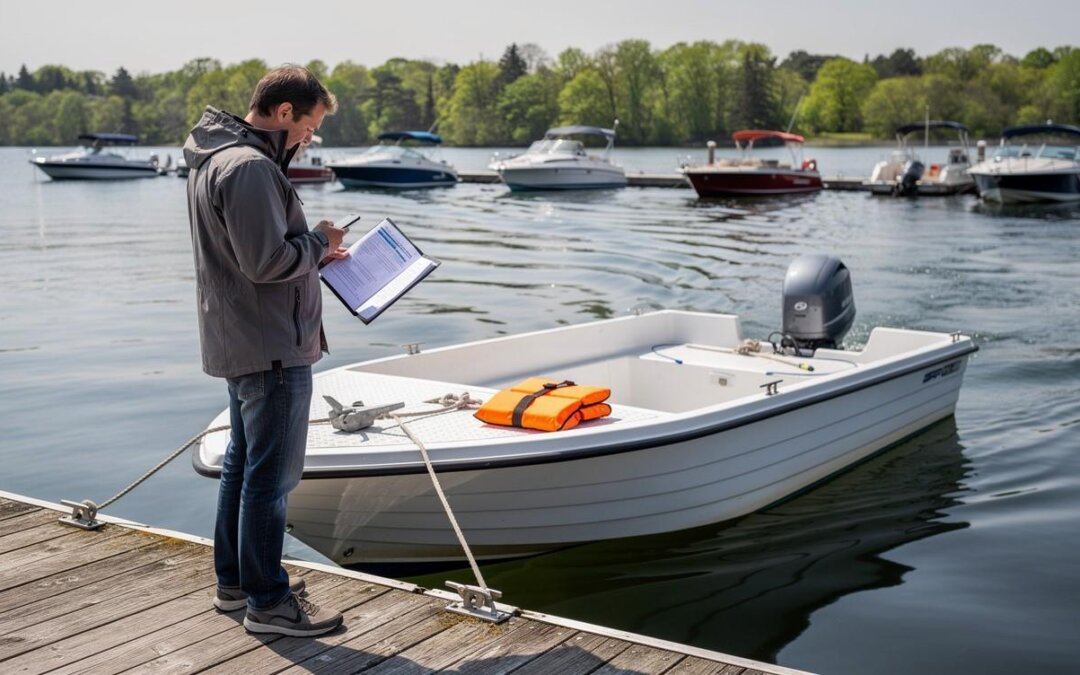
Ohio boaters face real risks on the water, from collisions to medical emergencies. A recreational boat policy in Ohio protects you against these dangers while you’re enjoying your weekend getaways.
At Central Ohio Insurance Services, Inc., we help boat owners understand what coverage they actually need. This guide breaks down the essentials so you can get on the water with confidence.
What Your Boat Policy Actually Covers in Ohio
Hull and Damage Protection
Your boat policy in Ohio protects three critical areas that directly impact your finances and safety on the water. Hull and damage protection covers repairs or replacement if your boat sustains damage from collision, storms, theft, or sinking. You choose between Agreed Hull Value, which pays what you and your insurer agreed the boat is worth for total losses, or Actual Cash Value, which pays the current market price and typically costs less in premiums. The difference matters: Agreed Hull Value with new-for-old replacement means your engine and gear receive coverage as new, while Actual Cash Value pays depreciated amounts.
For weekend getaway boats, Agreed Hull Value protects your investment better, especially if you finance through a lender who will require it anyway. This coverage option ensures that if a storm damages your boat or a collision totals it, you recover the full agreed value rather than a reduced depreciated amount.
Liability and Medical Coverage
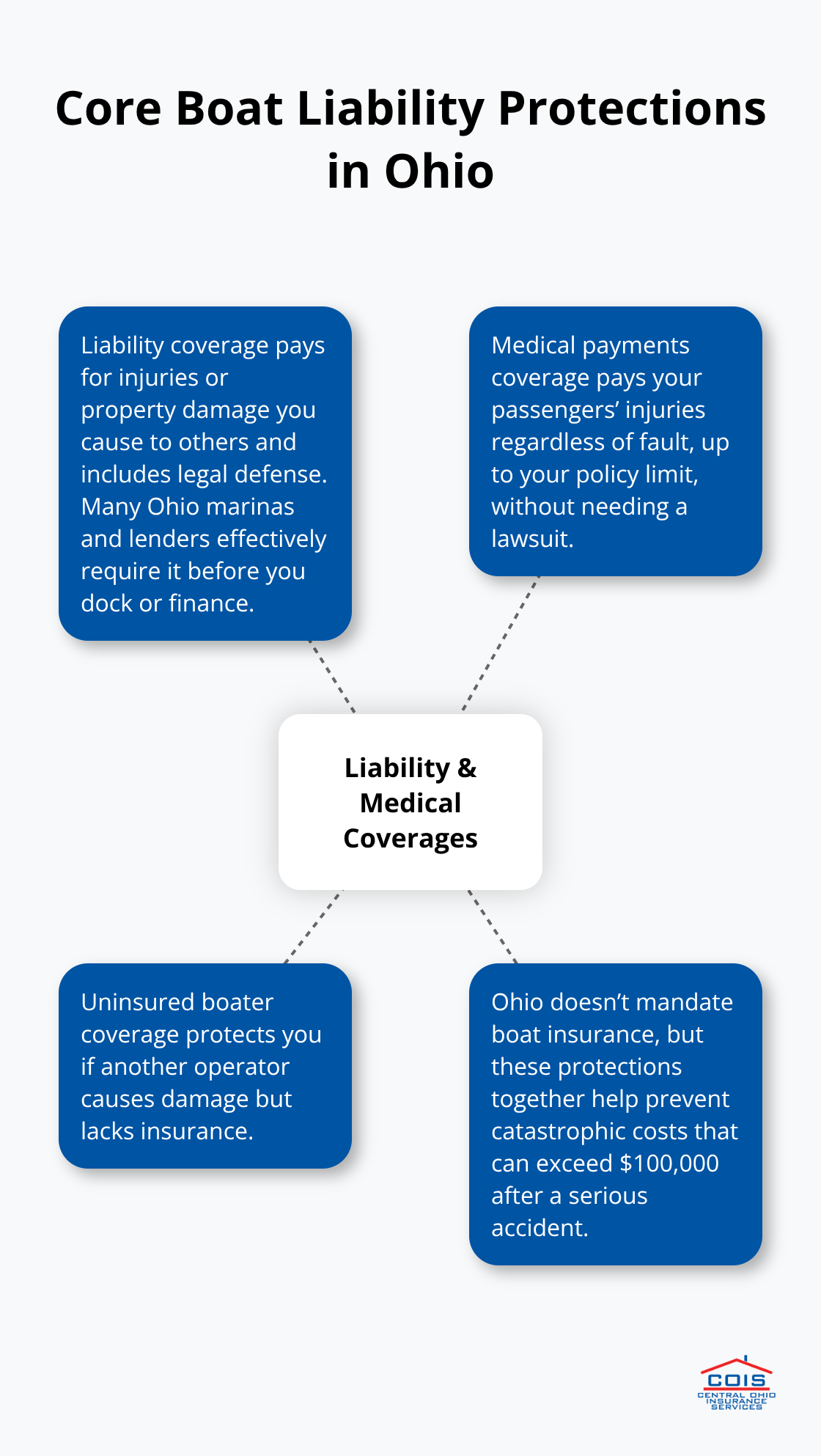
Liability coverage is the second pillar and covers injuries or property damage you cause to others while operating your boat. This isn’t optional in practice-most Ohio marinas require it before you dock, and any lender financing your watercraft will mandate it. Your policy covers medical bills, lost wages, and legal defense if someone sues after an accident.
Medical payments coverage operates separately and covers your passengers’ injuries regardless of fault, paying up to your policy limit without requiring a lawsuit. Uninsured boater coverage protects you if another boat operator causes damage but lacks insurance. Ohio doesn’t legally require boat insurance, but these three coverages work together to shield you from catastrophic costs that could exceed $100,000 in a serious accident.
Additional Protections for Weekend Trips
Additional protections expand your coverage for specific scenarios you’ll encounter on weekend getaways. Wreck removal coverage pays to extract your boat if it sinks, and watersport coverage reimburses medical expenses when your guests sustain injuries during activities like water-skiing or tubing. Personal effects coverage replaces fishing equipment and on-board items up to $10,000 total (with a $1,000 limit per item), which matters if you carry expensive tackle or electronics on weekend trips.
These add-ons address gaps that standard policies leave open. When you select your coverage options, the specific protections you add depend on how you use your boat and what equipment you bring aboard. Understanding which add-ons apply to your boating style helps you avoid paying for unnecessary coverage while protecting what matters most.
Types of Boats and Watercraft Requiring Coverage in Ohio
Different watercraft types trigger different coverage requirements and pricing structures in Ohio. Your boat’s category determines both what you must carry and what premiums you’ll pay.
Fishing Boats and Center Consoles
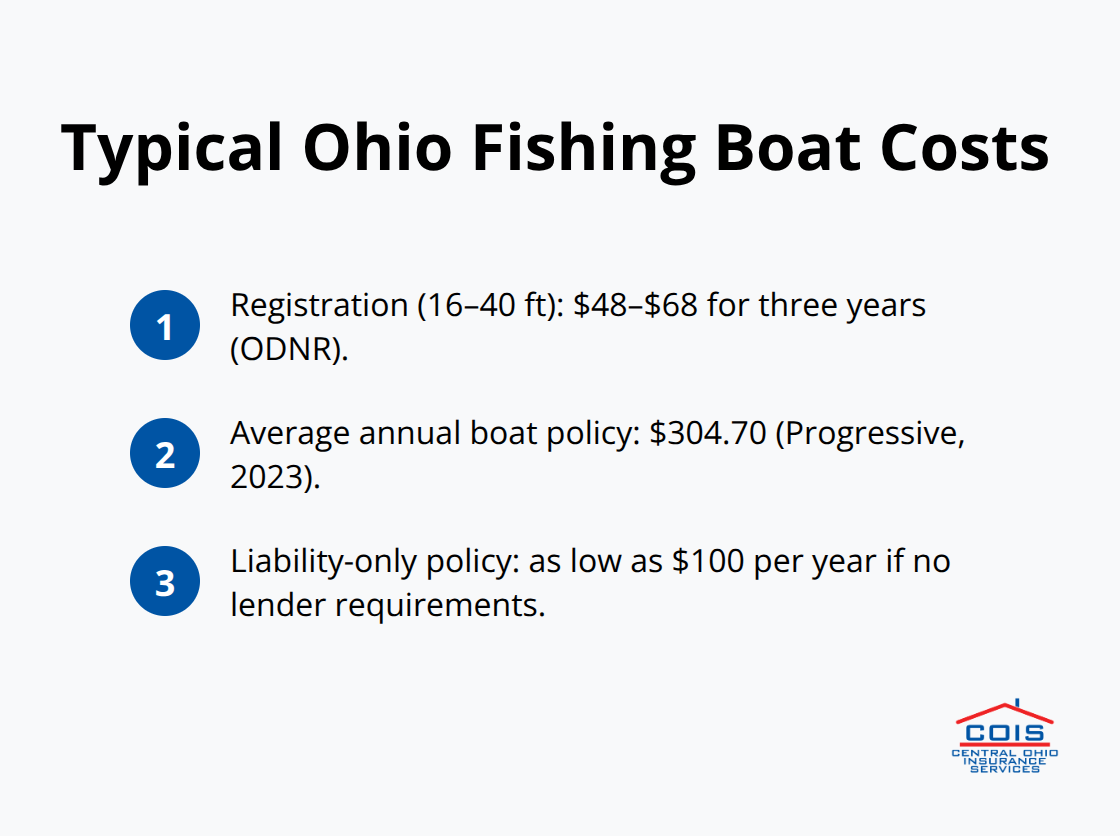
Fishing boats and center consoles dominate Ohio’s inland waters and require full recreational boat policies because they’re motorized vessels. These boats typically range from 16 to 40 feet, placing them in the mid-tier fee structure where registration costs between $48 and $68 for three years through Ohio’s Department of Natural Resources. Insurance premiums for fishing boats vary based on horsepower, hull material, and whether you’re the original owner-Progressive’s 2023 data showed the average annual Ohio boat policy cost at $304.70, though liability-only policies run as low as $100 per year if you own the boat outright with no lender requirements.
Insurance companies rate fishing boats higher when you carry expensive electronics or fishing equipment. Personal effects coverage addresses this gap, covering tackle and gear up to $10,000 total with a $1,000 per-item limit. This protection matters if you invest in quality sonar systems or high-end tackle boxes.
Pontoons and Deck Boats
Pontoons and deck boats follow the same registration and insurance requirements as fishing boats. Pontoons present a specific advantage: their stable design and slower speeds often qualify you for modest insurance discounts if you complete an approved boating safety course. NASBLA-approved courses satisfy Ohio’s requirements and can reduce your annual premium by 5 to 10 percent depending on your insurer.
Personal Watercraft and Jet Skis
Jet Skis and personal watercraft operate under completely different rules that catch many Ohio boaters off guard. These watercraft require registration like any motorized vessel, but some insurance carriers charge significantly more for PWC coverage or exclude certain protections like new-for-old replacement on total losses. The registration fee for a jet ski under 16 feet runs $33 for three years, but insurance premiums spike because underwriters view PWC operators as higher risk, with rates often double or triple what you’d pay for a comparable fishing boat.
Multi-Watercraft Ownership and Discounts
If you own multiple watercraft types-say a fishing boat and a jet ski-bundling them on one policy typically unlocks multi-policy discounts. These discounts also apply if you insure your auto or home with the same carrier, reducing your total boating insurance cost by 10 to 15 percent depending on the insurer. When you shop for coverage across multiple boats, comparing quotes from different carriers reveals which ones offer the best bundling rates for your specific watercraft mix.
Understanding your boat’s classification and the coverage it requires sets the stage for selecting the right policy limits and add-ons that match your actual boating activities.
How to Choose the Right Boat Insurance Policy
Assess Your Boat’s Value and Usage Frequency
Selecting boat insurance feels overwhelming when you’re comparing dozens of policy options, but the process becomes manageable once you identify what actually matters for your specific boat and how you use it. Start by determining your boat’s current market value and how often you’ll operate it during the season-these two factors drive everything else. A fishing boat worth $35,000 that you use every weekend demands different coverage than a pontoon worth $18,000 that sits in storage most months.
If you financed your boat, your lender will require Agreed Hull Value coverage, which pays to replace your boat up to its agreed hull value determined when you start your policy. If you own it outright, Actual Cash Value saves you money on premiums but pays depreciated amounts for total losses, so this choice depends on whether you’d rather pay less upfront or recover full replacement cost if something catastrophic happens.
Compare Coverage Limits Across Multiple Carriers
Contact at least three carriers for quotes-Progressive, GEICO Marine, and BoatUS all operate in Ohio, and their pricing shows significant variation. When you receive quotes, don’t compare the total premium alone; instead, compare what each quote includes for the same coverage limits.
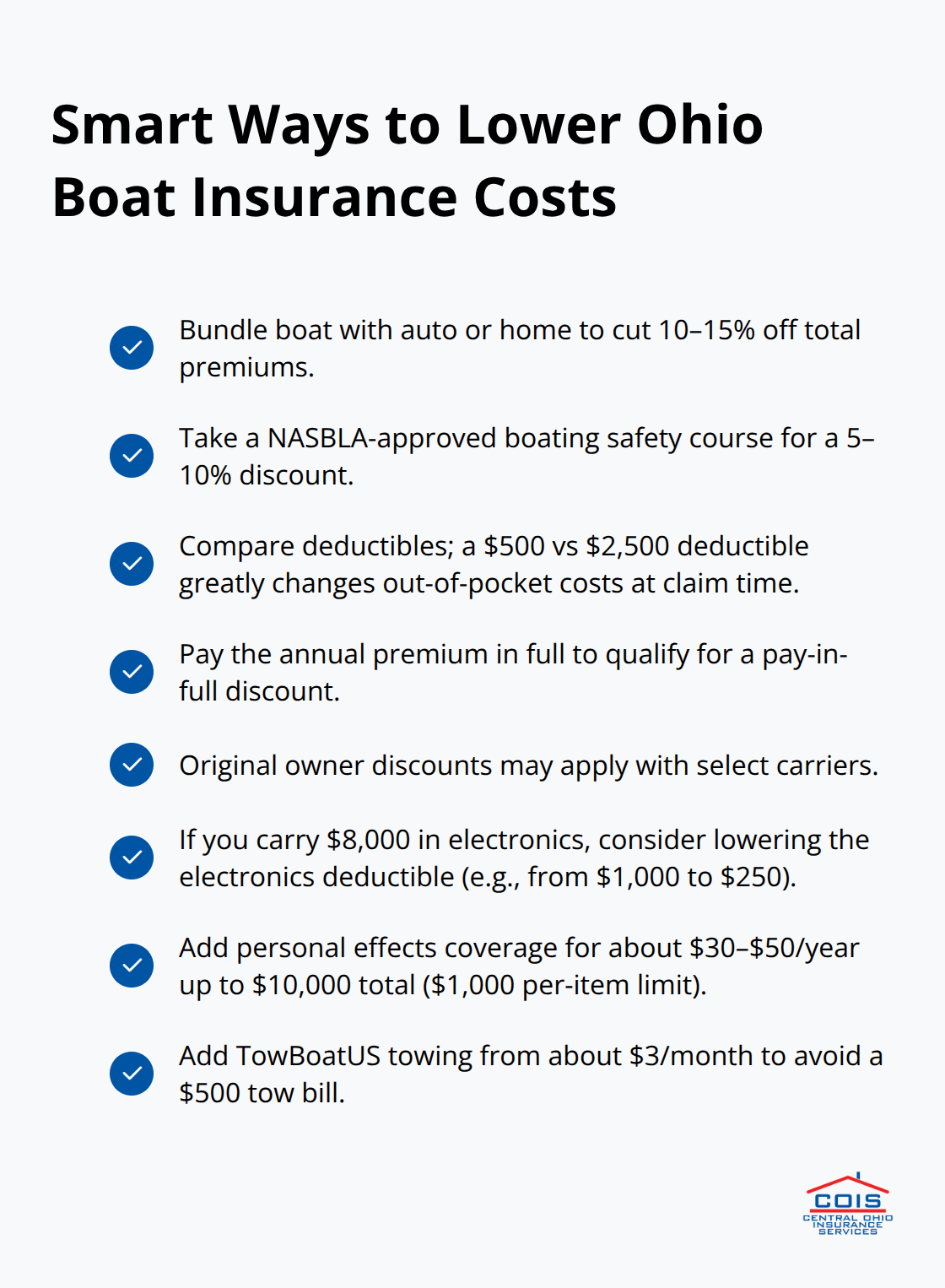
A $250 annual policy might have a $2,500 deductible while another $280 policy carries a $500 deductible-the lower deductible could cost you an extra $30 per year but saves you $2,000 if you file a claim. Deductibles matter more than most boaters realize, and they vary by coverage type within the same policy. Your hull deductible might be $500, but electronics deductible could be $500 or $1,000 depending on what you select.
Review Deductibles and Premium Costs
If you carry $8,000 in sonar and GPS equipment, paying an extra $40 annually to drop the electronics deductible from $1,000 to $250 makes financial sense. Bundle discounts change the equation entirely-combining your boat policy with auto, homeowners, or renters coverage typically cuts 10 to 15 percent off your total premium across all policies.
Additional discounts apply if you’re the original boat owner, pay your annual premium in full rather than in installments, or complete an approved boating safety course. Ohio recognizes NASBLA-approved courses, and taking one can reduce your premium by 5 to 10 percent while satisfying state requirements if anyone under 18 operates your boat.
Evaluate Add-Ons for Your Boating Style
Verify what add-ons matter for your situation before you finalize coverage. If you carry expensive fishing equipment, personal effects coverage costs roughly $30 to $50 annually but protects up to $10,000 in gear with a $1,000 per-item limit. TowBoatUS towing runs as little as $3 per month depending on your boat size and location, and that protection prevents a $500 tow bill from becoming your problem on the water.
Central Ohio Insurance Services, Inc. shops multiple carriers to help boat owners navigate these decisions and explain what each option costs and covers, so you’re not making insurance choices in a vacuum.
Final Thoughts
Three core coverage areas protect your boat for weekend getaways in Ohio: hull and damage protection that replaces your boat if damaged or totaled, liability coverage that shields you from injury claims and property damage lawsuits, and medical payments coverage that handles your passengers’ medical bills regardless of fault. A serious collision generates $100,000 or more in damages, but the right recreational boat policy Ohio prevents that catastrophic cost from destroying your finances. These three pillars work together to keep a single accident from becoming a financial disaster.
Weekend boating trips expose you to real risks that most people underestimate-storms sink boats, collisions happen in seconds, and medical emergencies on the water demand immediate response. Adequate protection means you’re not choosing between paying for repairs yourself or losing your boat entirely, and your guests can enjoy water-skiing without you worrying about their medical bills if they get injured. You can dock at Ohio marinas that require liability coverage before you tie up, and you operate with confidence knowing your investment stays protected.
Getting a quote takes less than 15 minutes, and comparing three carriers reveals how much your coverage choice actually costs (the difference between a $100 liability-only policy and a $350 comprehensive policy with add-ons might seem significant, but that extra $250 annually covers wreck removal, personal effects, and watersport protection that could save you thousands if something goes wrong). Contact us to get your quote and protect your weekend getaways on Ohio’s water.
The information provided in this blog is for general informational purposes only and does not constitute legal, financial, or insurance advice. Coverage options, terms, and availability may vary. Please consult with a licensed professional for advice specific to your situation. Artificial intelligence may have been used to generate text and images in some blog articles and may contain inacuracies.